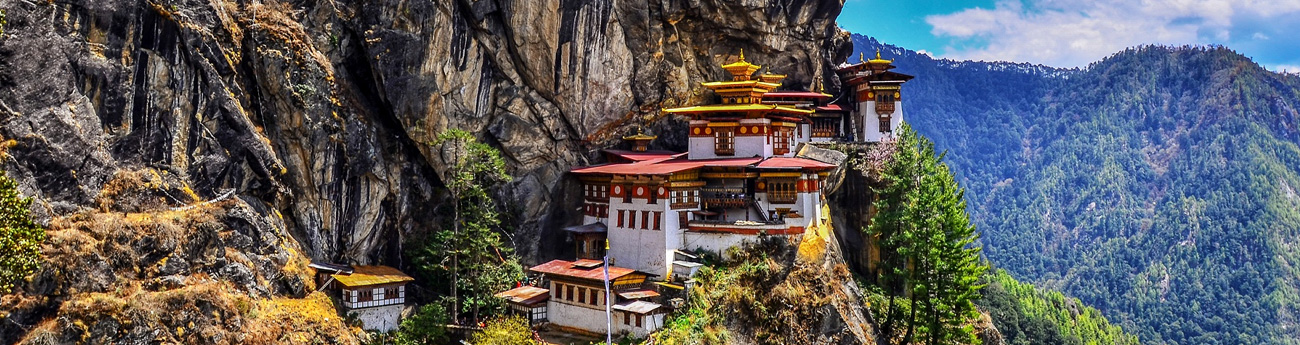
Considered as the most beautiful and famous archaeological sites in Bhutan, the Drukgyel Dzong is situated on a ridge in the upper Paro Valley. The meaning fo Drukgyal Dzong is the “fortress of the victorious Drukpas”. Drukgyal Dzong is one of the four principal Dra Dzongs (defense fortress). The other defense fortresses are the Gasa Trashi Thongmon Dzong, Haa Damthang Dzong and Lingzhi Dzong.
History Drukgyel Dzong is one of the Dzongs built by Zhabdrung Ngawang Namgyal, who came to Bhutan in 1616 escaping the conflict over recognition of the principal abbot of the Drukpa-Kagyud School in Ralung, Tibet. Zhabdrung and his successors built several fortresses called Dzong with the motive of gaining control over different regions of the country, which were dominated by clergies and leaders of different Buddhist schools.
Built in the year 1649, the Dzong has been constructed on the summit of a rocky hill that raises step on three sides. The place is accessible only from one side which is defended by the 3 prominent towers. Since its construction, the Drukgyel Dzong has been served as an important base for defense, until 1951 when it was destroyed by fire. The ruins of the Dzong continued to be protected as an important monument linking people of Bhutan with the great events, even after the destruction.
Architecture of Drukgyel Dzong The existing ruins of the Dzong are well preserved, and one can easily distinguish the features of the complex. The major portion of the Dzong such as roof truss, door, and window frames, and floors and ceilings are almost totally absent. But, portion of stone and rammed earth wall structures are still standing. The remains of the Dzong reflect the ideas and practices used for defense in the old times.
The Dzong consists of Utse, the central tower building, which housed a shrine of guardian deities, and Shabkhor, rectangular buildings surrounding the courtyards. The geographical condition of the hill was kept in mind while constructing the Dzong. Secret tunnels providing protected passages to fetch water from the river below the hill as well as to send troops during the time of war are said to have existed. Presently, the cylindrical tower buildings called chu-dzong (water fort) can be seen connected with each other with paths enclosed by defensive walls.
South Asia is home to solid one-third of the world’s population. The region is home to the highest and the second highest mountain peaks of the world Everest and K2. Housing marvels such as the Taj Mahal, Ajanta, Sigiriya, Timpu, and Taxila, the heritage and cultures of the region date back thousands of years.
Whether you are interested in a Sight Seeing Tour, Season Special Tour or you are on a look out for a Pilgrimage Tour, these pocket friendly tour packages will make your journey to this majestic land worth remembering.
GET FREE TOUR QUOTES

1. Choose your destination

2. Customize your tour

3. Confirm your booking

4. Live an unforgettable experience!